Have you ever sat in a meeting, nodded along, and quietly wondered, “Okay… but what does that actually mean for my business?”, you’re definitely not the only one.
Marketing has always come with a lot of jargon. Recently, though, it’s taken on a life of its own. Search is shifting, AI tools are changing how people compare suppliers, and suddenly there’s a whole new layer of terminology to get your head around.
We’re in this space every day. We’re helping brands stay visible as search evolves, from GEO and AIO to the broader shift towards answer-led discovery. We’re noticing the same thing time and again, the businesses that stand out are the ones that are clear, credible, and easy to trust.
This guide is here to make sense of the terms you’re likely to hear, why they matter, and what’s actually worth paying attention to.
How buyer behaviour is shifting
AI isn’t something that’s coming later. It’s already changing how people search, compare options, and decide who to trust.
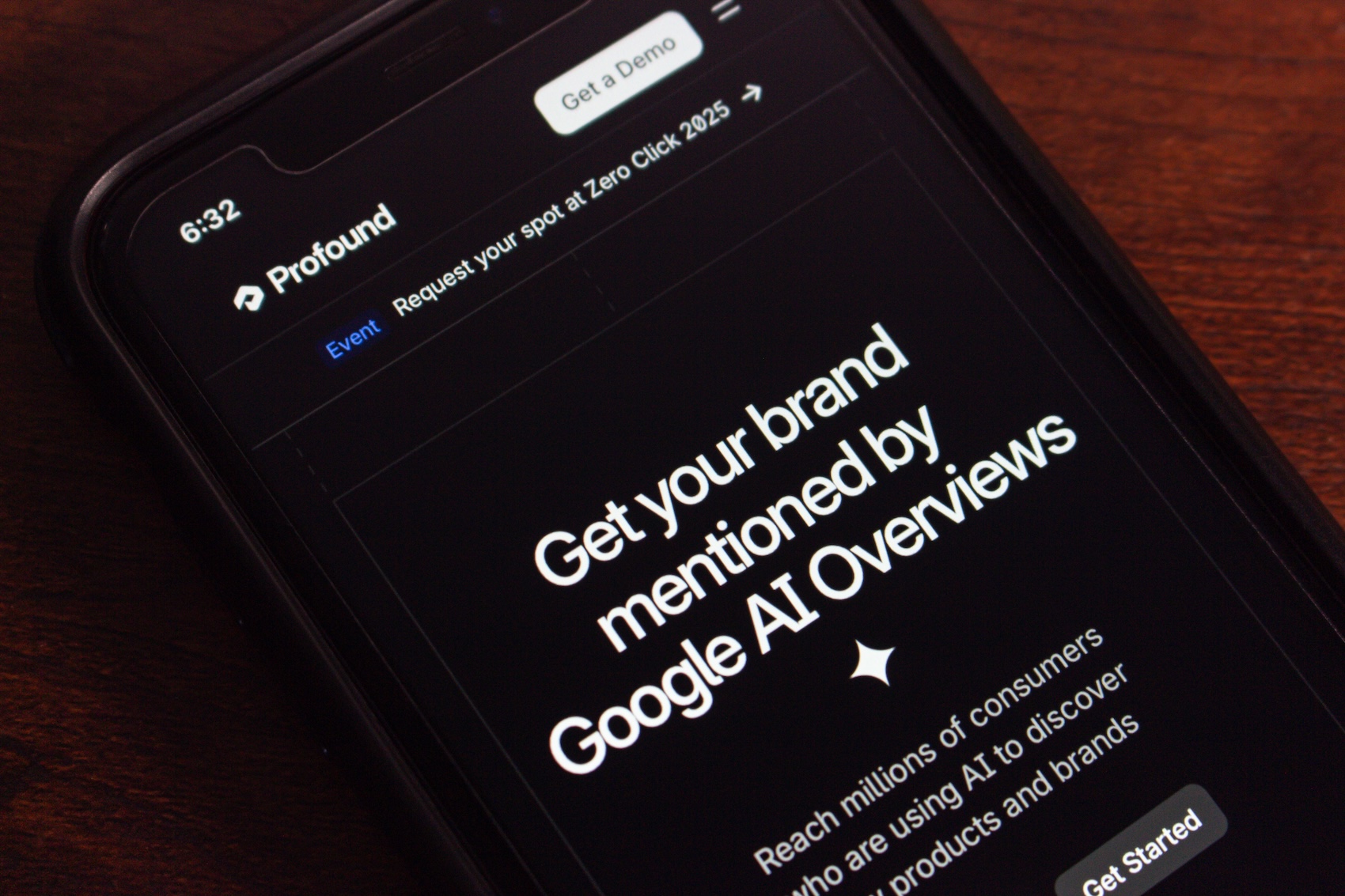
We’re seeing more early research happen before a user ever reaches a website, whether that’s through Google’s AI Overviews or inside tools like ChatGPT and Perplexity. That often means fewer clicks from people at the start of their research. The upside is that the clicks you do get are usually more qualified, with people looking for proof, pricing, reassurance, or a clear next step.
That changes what visibility really means. It’s no longer just about appearing in search results. It’s about being clear and credible enough to be understood quickly, both by people and by AI tools.
The businesses benefiting most tend to make that easy. Their messaging is specific, their offer is clear, and the proof is there. The ones that struggle usually have the opposite problem: vague services, limited proof, and websites that leave too much unsaid. That makes them harder to trust and easier to overlook.
AEO
AEO stands for Answer Engine Optimisation. It means writing your content so search engines and AI tools can easily use it as a direct answer.
You’ve already seen this in action, even if you have not heard the term before. It shows up in places like featured snippets, “People also ask”, and AI summaries. It’s where a platform pulls a short section of text from a website and shows it straight on the results page.
AEO works best when your content is built around real customer questions. Think about the things people genuinely want to know before they choose a supplier, like: what it costs, how long it takes, what the process looks like, what to watch out for, and common mistakes to avoid.
The key is clarity. If your pages are easy to scan and get to the point quickly, they’re far more likely to be picked up and shown as an answer.
A good starting point is to review your main service pages and add clear headings, short paragraphs, and a simple FAQ section that mirrors the questions your customers are asking.

GEO
If AEO is about showing up as the direct answer, GEO is about showing up inside the AI-generated answer itself.
GEO stands for Generative Engine Optimisation. It’s the work that increases the chances of your business being mentioned or referenced when someone uses an AI tool to ask a question like, “I am [insert] type of runner, which [brand] would suit me best?” or “Which brand of padel balls are the best?”
The reason GEO matters is that AI tools are increasingly being used to shortlist options. People aren’t always clicking ten different websites anymore. They’re asking a tool to summarise the best options and then deciding what to do next.
So, your visibility isn’t only about rankings, it’s also about whether your business is clearly understood and trusted enough to be included in the summary.
AIO
You may also come across AIO, which is often used as a broader umbrella term.
AIO stands for AI Optimisation. It’s about improving how your brand shows up across AI-influenced search and discovery, whether that’s through AI summaries, conversational results, or recommendation style answers.
It helps to think of AIO as the bigger picture. It brings together the things that make a brand easier for AI tools to understand and trust: clear content, strong visibility in AI answers, credible proof, and a digital presence that’s consistent across the web.
For most businesses, AIO isn’t a brand new channel to chase. It’s a sign of where AI search is heading. The brands that perform well tend to be the ones that are clear about what they do, back it up with evidence, and make it easy for both people and platforms to understand them.
That’s why the fundamentals matter so much here. If your messaging is vague or your online presence is inconsistent, AI tools have far less to work with. If it’s clear, specific, and trustworthy, you’re in a much stronger position.
LLM
An LLM is a Large Language Model. It’s the technology behind tools like ChatGPT, Gemini and Claude. These models generate answers by learning patterns in large amounts of data.
For most business owners, the technical detail matters less than what these tools are now being used for. They’re built into search engines, browsers, and workplace tools, and people are starting to use them to research options, compare suppliers, and make decisions more quickly.
You can see this happening in tools like ChatGPT search, which blends conversational answers with links to web sources.
That means your business can be judged before someone ever reaches your website. If the information AI tools find about you is vague, outdated, or inconsistent, the picture they build may be incomplete or not strong enough to include you at all.
This is why your website matters in a slightly different way now. It’s no longer just where people land after searching. It’s also part of the information AI tools use to understand who you are, what you do, and whether you’re worth recommending.
A good place to start is by checking your key pages for clarity. It should be obvious what you do, who you help, where you operate, and what makes you different.
E-E-A-T
You’ll often hear E-E-A-T mentioned in the same conversations around search and AI.
It stands for Experience, Expertise, Authoritativeness, and Trust. It’s about how credible your business looks online. As search engines and AI tools try to surface the most reliable information, those trust signals matter more.
E-E-A-T isn’t something you “add” to a page. It’s built over time through the way your business shows up online, the proof you provide, the clarity of your information, and the confidence your content gives people.
That’s why businesses with strong case studies, detailed testimonials, clear service pages, and visible expertise tend to stand out more. They make it easier for both users and search platforms to understand who they are, what they do, and why they can be trusted.
A good place to start is by looking at the signals your site already gives off. Are your business details clear? Do your pages show real experience? Is there enough evidence on the page to back up what you say? If not, that’s usually where the work starts.
Zero-click search
And finally, zero-click search.
Zero-click search is when someone searches on Google, gets the answer directly on the results page, and never clicks through to any website.
AI features accelerate this trend. Google also shares how its AI search features work and how they’re intended to connect users with helpful sites. Instead of sending people off to explore multiple pages, search results are increasingly designed to answer the question immediately through snippets, summaries, and AI overviews.
The important point is what this means for your marketing. You might see fewer clicks overall, but the clicks you do earn can be higher intent. If someone leaves an AI summary to visit your website, they’re often deeper in the decision process and looking for specifics like, proof, pricing, process, or reassurance.
This is why we encourage businesses to measure more than traffic. What matters is what traffic turns into: enquiries, calls, bookings, sales and how effectively your website converts people once they land.
The simple takeaway
You don’t need to memorise every acronym.
But you do need to understand what’s changing. More decision-making is happening inside answers and not just on websites. That means your brand needs to be easy to understand, easy to trust, and ready to convert the traffic you earn.
At Brace, we help businesses stay visible as search evolves. From SEO and content, through to GEO and AIO, and the practical improvements that turn visibility into enquiries.
If you want a clear view of how your business shows up in AI-driven search, contact us and we can help you identify what to prioritise first, and what will make the biggest difference.